Dutch PM Jetten used AI for hundreds of social media posts — and defense ministers may have used it for speeches
Dutch PM Rob Jetten admits using AI for hundreds of social media posts. A separate analysis shows defense ministers used AI for speeches. Critics say it undermines authenticity and transparency.
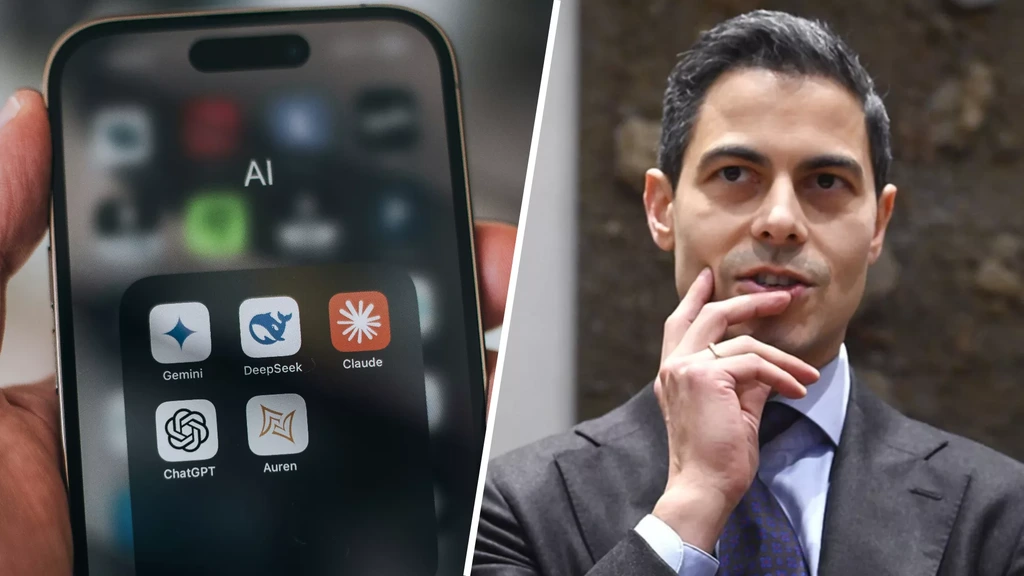
Dutch Prime Minister Rob Jetten has acknowledged using artificial intelligence to write hundreds of social media posts, a practice that raises questions about authenticity and transparency in political communication. The revelation comes from an investigation by De Volkskrant published on 10 September 2026, which used detection software Pangram to analyze Jetten's posts. Jetten confirmed the practice to NOS, calling AI a "helper" that still requires human oversight (NOS).
But the story doesn't end there. The same week, a separate analysis by news program Nieuwsuur of 77 ministerial speeches found that Defence Minister Dilan Yesilgöz and State Secretary Derk Boswijk used AI extensively — in five cases, speeches appeared to be almost entirely AI-generated. The Ministry of Defence denies that AI is used to write complete speeches, stating it is only an aid (NOS).
What the analysis found
Pangram flagged 15 of the 77 speeches as suspicious. Ten contained AI-generated fragments; five were almost entirely AI-written. Thirteen of the 15 flagged speeches came from the defence ministry: Yesilgöz and Boswijk accounted for all five that were almost entirely synthetic. Education Minister Rianne Letschert and State Secretary Judith Tielen also had speeches flagged, but with only 12 percent AI content — far lower than the defence ministers' totals.
The authenticity problem
Communication scholars are critical. Mariken van der Velden, professor of political communication at Vrije Universiteit Amsterdam, told NOS that the practice puts Jetten's credibility at stake: "AI is often mentioned in the same breath as misinformation. You want to be able to trust the information coming from the prime minister" (NOS). Claes de Vreese, professor of AI and society, added: "Language models create a kind of desirable emotion, not necessarily what you really feel. People will start to wonder: who is the real Jetten? This dilutes the prime minister's authenticity."
Tom Dobber, a political communication researcher at the University of Amsterdam, told Nieuwsuur that the flagged speeches contained "awkward and hollow language, a bit meaningless, and really typical AI formulations" (NOS).
Transparency gap
Jetten's party D66 supported the EU AI Act, which emphasizes the importance of transparency in AI use. Yet the party did not disclose its use of AI for social media posts — a point critics say undermines the spirit of the regulation. Jetten said on Wednesday that "using AI as a tool does not mean that no human eyes have looked at it" (NOS). But the lack of disclosure, combined with the extensive use of AI in official communications, leaves the public guessing where human input ends and machine generation begins.
What's next
The revelations come as the Netherlands grapples with broader questions about AI in government. The EU AI Act, which D66 supported, requires transparency for high-risk AI systems — but does not explicitly cover political speech. Scholars are calling for clearer rules. "It's essentially automating what press officers and spin doctors used to do," Van der Velden said. "But when a machine does it, the authenticity is fundamentally different."
For now, Jetten and the defence ministers face no formal consequences. But the incident is already being cited by transparency advocates as a case for mandatory AI disclosure in all official communications.
This article is based on reporting from NOS and De Volkskrant. For further reading, see the original coverage:
Sources
- Premier Jetten liet zijn berichten door AI schrijven: handig of zorgelijk? September 10, 2026
- Wekdienst 11/9: 25 jaar na aanslagen VS • Staking bouwsector September 11, 2026
- Jetten deed het op sociale media, deze kabinetsleden schreven hele speeches met AI September 11, 2026
Part of the dossier
Politicians using AI for social media posts →