Finland bets on Ukraine as its best security guarantee — and buys into France's nuclear umbrella
Finland's President Stubb calls Ukraine the best security guarantee against Russia, backs it with a €290 million aid package, and joins France's nuclear deterrent initiative. The moves reflect a broader European shift toward self-reliance amid US uncertainty, with practical implications for defence procurement and deterrence.
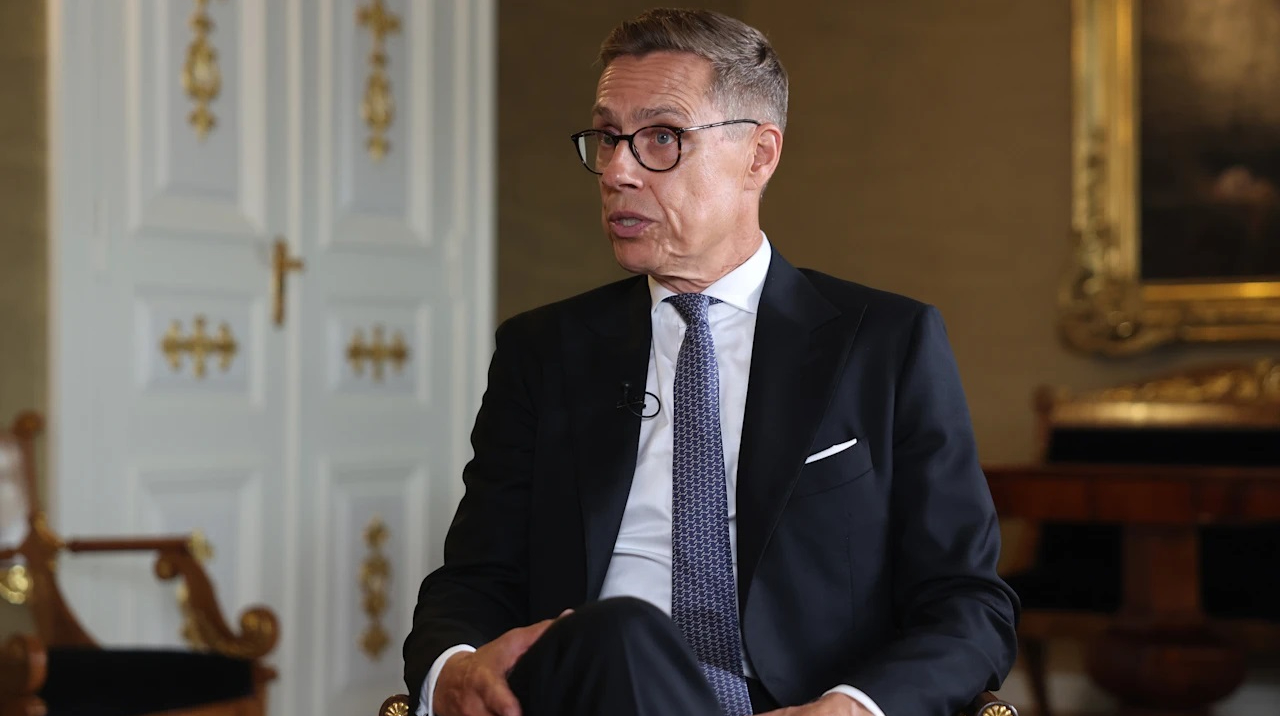
Finland's security posture has hardened in a way that is hard to miss from Helsinki: President Alexander Stubb is publicly calling Ukraine "the best guarantee of our security against Russia," his government just approved a €290 million military aid package for Kyiv, and Finland has signed up to France's nuclear deterrent initiative. Taken together, the moves signal a shift from cautious Nordic neutrality to active participation in Europe's forward defence — and they carry practical implications for anyone watching European security architecture.
Ukraine as the frontline guarantee
In an interview with German tabloid Bild, Stubb argued that Ukraine is "in a stronger and better position than ever before during this war – militarily, politically and financially," and that "Ukraine has the advantage, and it is winning this war." He framed support for Kyiv as an investment in Finland's own defence: "If Ukraine loses, we lose too" (Ukrainska Pravda).
That is not just rhetoric. On 15 September, Finland announced its 34th military aid package for Ukraine, worth €290 million, with materiel that Ukraine had "urgently requested," according to Stubb's post on X. The package comes as Ukraine prepares for its fifth winter of war, and Stubb said Finland is actively working to ensure sufficient energy supplies for the country (Ukrainska Pravda).
For engineers and operators, the relevant detail is what the package contains — but that has not been disclosed. Finland's previous packages have included air defence systems, artillery ammunition and armoured vehicles, and Stubb has said the next air defence package will address "critical needs." The lack of an itemised list is typical for operational security reasons, but it also means the practical impact on Ukraine's defence is hard to assess from the outside.
Nuclear umbrella, minus the button
A day before the aid announcement, Finland joined France's Forward Deterrence Initiative, becoming the 10th European country to sign up for cooperation with France's nuclear deterrent. The joint statement from the Finnish and French foreign ministers in Helsinki said the initiative is "first and foremost about strengthening European security" (Al Jazeera).
What does this actually change? Under the initiative, the French president alone retains the authority to decide when nuclear weapons are used. Finland does not get a veto or a seat at the decision table. What it gets is a nuclear steering group, to be set up in the coming months, and deeper military cooperation with France. Stubb was explicit that the initiative does not replace NATO's nuclear deterrence and that the move had been discussed with the US and the alliance.
The timing is telling. Estonia's Prime Minister Kristen Michal told AFP that his country is also in talks with France, saying "we are under NATO's nuclear umbrella already" but deeper nuclear cooperation "probably will go so." The broader context is President Trump's shake-up of NATO, which has pushed European states closer to Russia to hedge against a US withdrawal from continental defence.
Russian drones on Finnish beaches
Finland's security concerns are not abstract. On 4 September, Helsinki identified a drone found on a beach as a Russian Geoscan 701 (Ukrainska Pravda). The drone is a reconnaissance model, not a weapon, but its presence on Finnish territory is a reminder that Moscow's surveillance activity extends beyond Ukraine. Finland completed its investigation into Ukrainian drones entering its territory on 9 September, though the findings have not been made public (Ukrainska Pravda).
What it means for the tech and defence community
For those building defence and surveillance systems, the Finnish moves reinforce a few trends. First, European procurement is shifting toward long-term deterrence infrastructure — nuclear cooperation, air defence, and drone detection — not just immediate aid packages. Second, the €290 million package and the French initiative signal that Finland is willing to spend and integrate with European defence structures, which could open opportunities for contractors in areas like air defence, energy resilience, and drone countermeasures.
The open questions remain: what exactly is in the 34th aid package, and how will the French nuclear umbrella and NATO deterrence be coordinated in practice? Stubb has said Ukraine needs to be prepared for the "worst" case this winter, and Finland is preparing its next air defence package. Whether that translates into a sustained European security architecture — or just a series of ad hoc responses — is still to be seen.
Sources
- Finnish president: Ukraine is the best guarantee of our security against Russia August 29, 2026
- Finland identifies drone found on beach as Russian Geoscan 701 September 4, 2026
- Ukraine is signing contracts for around 1,000 Patriot missiles, says defence minister September 9, 2026
- Finland completes investigation into Ukrainian drones entering its territory September 9, 2026
- Finland approves €290 million aid package for Ukraine September 15, 2026
- Finland shelters under French nuclear umbrella amid Russian, US uncertainty September 14, 2026
Part of the dossier
Finland's Stance on Ukraine as Security Guarantee →