Poland's Airspace Shuts Down Again as Russian Jet-Powered Drones Test NATO's Eastern Flank
Poland scrambles fighter jets and closes airports for second straight day as Russian jet-powered drones strike near the border. PM Tusk warns of a critical 7-8 month escalation window, while a drone with a fragmentation warhead washes up on the Baltic coast. For tech operations, airspace reliability is gone — expect hours-long disruptions and rerouted logistics.
For the second consecutive day, Poland suspended operations at Lublin and Rzeszów airports on 17 September, scrambled fighter jets, and issued air-raid alerts in border voivodeships — this time after a Russian Gerbera-2 drone carrying a fragmentation warhead crashed near the Dorohusk-Yahodyn border crossing (Source 21, Source 22). The pattern is now clear: Russia is systematically probing Poland's air defence response times and civilian infrastructure resilience using jet-powered drones that are faster and harder to intercept than the Shahed-type propeller drones used earlier in the war.
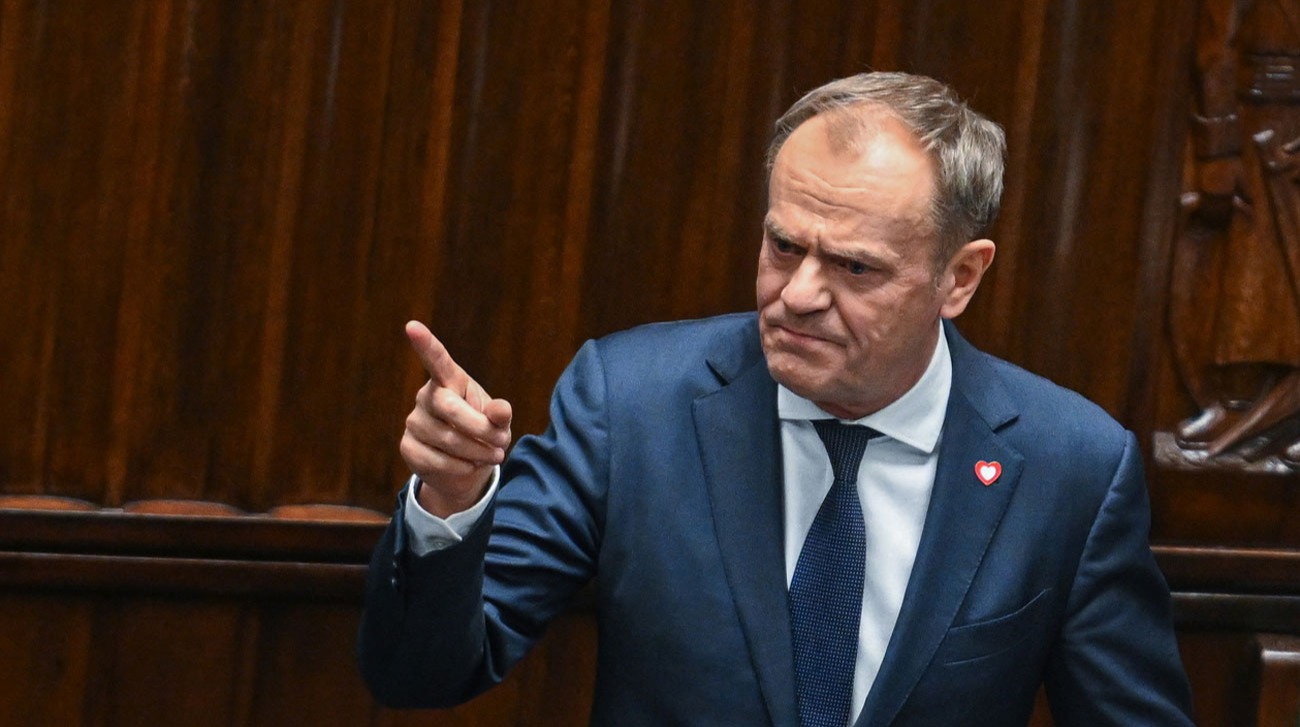
Prime Minister Donald Tusk confirmed that a Russian drone struck a petrol station 4 km from the border, producing a “very powerful explosion” (Source 21). The Polish Operational Command had pre-authorisation to shoot down the drone but did not do so because it fell on Ukrainian territory. Polish Deputy Defence Minister Cezary Tomczyk stated the commander “was ready to shoot down these objects” (Source 22).
What changed for tech operations
Airspace restrictions that were once rare are becoming routine. On 16 and 17 September, Lublin and Rzeszów airports — key logistics hubs for tech supply chains moving components and personnel into Ukraine — halted all flights during Russian drone attacks on western Ukraine (Source 17). The disruption window is now measured in hours, not minutes, and the Polish government has restricted air traffic over eastern Poland until 9 December to facilitate air defence operations (Source 9).
For engineers and logistics planners operating in the region, this means:
- No reliable flight schedules into Rzeszów or Lublin during Russian drone waves. Alternative routes via Kraków or Warsaw add 3–4 hours of ground transport.
- Border crossing congestion is a growing risk. Tusk announced plans to improve traffic flow at checkpoints to prevent vehicle queues becoming targets (Source 17). On 13 September, a passenger train was struck 2 km from the border while former UK PM Boris Johnson and ex-CIA director David Petraeus were nearby (Source 15).
- Drone warhead found on Baltic beach — on 14 September, a Gerbera-2 drone with a fragmentation warhead washed ashore in West Pomeranian Voivodeship, having flown from Russia via Lithuania (Source 18). The warhead was neutralised on the beach. This demonstrates that Russian drones can reach deep into Polish territory, potentially targeting coastal infrastructure.
The escalation timeline
Tusk has been warning since late August that Russia is “seriously preparing for an escalation” and that the next seven to eight months will be critical (Source 1). On 28 August, he told NATO Secretary General Mark Rutte that “the possibility of Russian provocations against a NATO member cannot be ruled out” (Source 3).
Ukrainian intelligence confirmed that Russia’s military leadership has been ordered to plan offensive operations toward Kyiv and Chernihiv, though no offensive force has yet been formed (Source 2).
The incidents have accelerated:
- 31 August: Polish F-16s intercepted a Russian Il-20 reconnaissance aircraft 30 km north of Łeba over the Baltic (Source 5).
- 2 September: Tusk confirmed a fire at a WB Electronics drone component factory in Skarżysko-Kamienna was deliberate sabotage (Source 7).
- 13 September: Russian strike on a passenger train near the Yahodyn-Dorohusk crossing — Tusk called it “escalation” (Source 14, Source 15).
- 16–17 September: Repeated drone waves trigger airport closures and jet scrambles (Source 20).
What the politicians are saying
Polish Foreign Minister Radosław Sikorski, who visited Kyiv on 11 September, stated that in the event of Russian aggression against NATO, European air forces alone could destroy half of Russia’s oil refineries “faster than Ukraine could, even without US involvement” (Source 16). This is a notable shift in tone from a NATO member — a direct capability claim aimed at deterrence.
Tusk will travel to Ukraine on 18 September to meet Slovak PM Robert Fico and discuss sanctions against Russia, including pressure on France and Slovakia to drop their demands for removing oligarchs from the sanctions list (Source 23).
Poland’s Defence Minister Władysław Kosiniak-Kamysz announced an increase in F-16 and helicopter deployments to protect airspace, and said “Russian provocations are taking different forms and pose a threat in places that had previously been considered safe” (Source 24).
Bottom line for the tech community
Poland’s airspace is no longer a safe transit corridor during Russian drone strikes. The combination of jet-powered drones, sabotage at defence factories, and the explicit planning for a larger offensive means that any tech operation relying on just-in-time logistics through eastern Poland needs to build in several hours of buffer — and have contingency plans for ground transport rerouting. The next 7–8 months, as Tusk put it, will determine whether this becomes the new normal or a prelude to a wider conflict.
Sources
- Polish PM: Russia is preparing for escalation, next 7–8 months will be critical August 29, 2026
- Putin orders military to plan for offensive towards Kyiv and Chernihiv August 29, 2026
- Polish PM speaks with NATO chief about possible Russian preparations for provocations against NATO states August 29, 2026
- "He's a fascist": Polish foreign minister reacts to far-right politician Braun damaging UPA memorial September 16, 2026
- Poland had to warn residents of Russian drone attack on Ukraine August 30, 2026
- Polish fighter jets intercept Russian reconnaissance aircraft August 31, 2026
- Kremlin claims Putin and Xi barely discussed war against Ukraine, saying it came up "as a refrain" August 31, 2026
- Polish PM convinced fire at Polish drone factory was sabotage September 2, 2026
- Polish fighter jets intercept Russian reconnaissance aircraft threatening civil aviation September 3, 2026
- Poland to restrict air traffic over east of country until 9 December to facilitate air defence operations September 3, 2026
- Poland says it lost about €113.5bn due to war in Ukraine September 10, 2026
- Polish PM: Poland expects Russia may attack border crossing points with Ukraine September 10, 2026
- Polish foreign minister arrives in Kyiv September 11, 2026
- Polish PM convenes special meeting over Russian strikes near border September 13, 2026
- Polish PM warns of possibility of more serious Russian attacks in Poland September 13, 2026
- Poland, Ukraine accuse Russia of ‘escalation’ after strikes near border September 13, 2026
- Polish foreign minister: NATO forces could destroy half of Russia's oil refineries without US involvement September 14, 2026
- Poland scrambles jets and closes airports due to Russian attacks on Ukraine's west September 16, 2026
- Polish prosecutors say drone found on beach carried warhead September 16, 2026
- Poland scrambles jets amid Russian drone attack on Ukraine, explosions heard near border September 17, 2026
- "There was a very powerful explosion": Polish PM says drone crashed near country's border September 17, 2026
- Polish airports suspend operations for second day running amid Russian drone attacks on Ukraine September 17, 2026
- Polish PM Tusk to visit Ukraine on Friday: to meet Slovak PM and discuss sanctions against Russia September 17, 2026
- Poland strengthens air defence amid latest Russian provocations September 17, 2026
Part of the dossier
Poland warns of Russian escalation →