Putin Signs Decree Allowing State Seizure of Infrastructure Vulnerable to Drone Strikes
Putin signed a decree on 24 August 2026 allowing the Russian government to temporarily take control of critical infrastructure facilities if owners fail to secure them against drone strikes or restore operations quickly. The move affects fuel, energy, transport and logistics assets, reflecting heightened concern over Ukrainian drone attacks deep inside Russia.
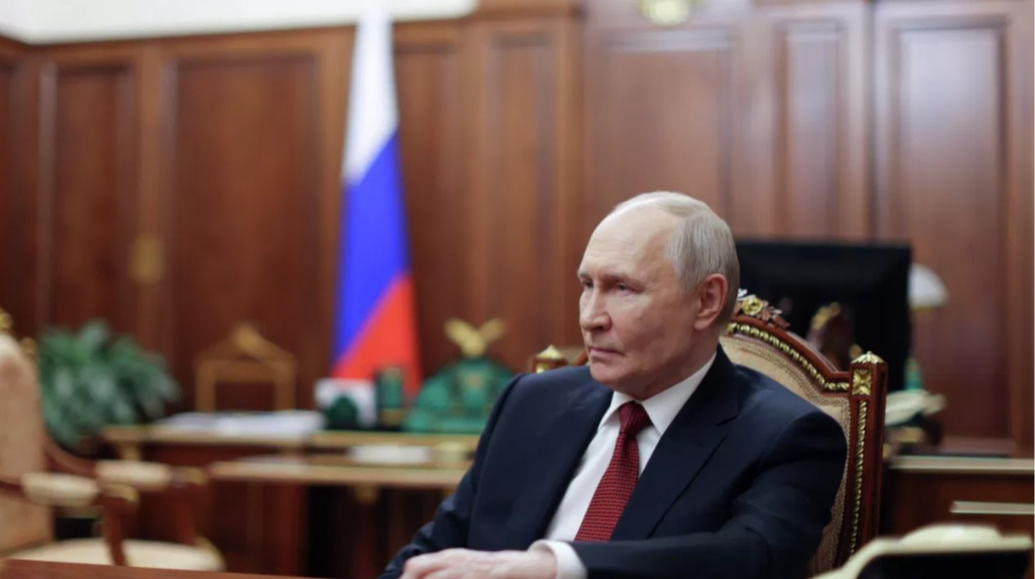
On 24 August 2026, Russian President Vladimir Putin signed a decree that enables the government to temporarily seize control of critical infrastructure facilities if their owners fail to protect them against drone attacks or do not restore operations in a timely manner. The move signals Moscow's deepening concern over Ukrainian drone operations striking deep inside Russian territory, and carries immediate implications for operators of fuel, energy, transport and logistics assets across the country.
The decree, titled "On Measures to Ensure the Security of Critical Infrastructure Facilities of the Russian Federation," was published by Kremlin-aligned news agency Interfax. It targets facilities deemed vulnerable to unmanned aerial vehicle attacks, covering the fuel and energy sector, industrial plants, communications networks, utilities, transport and logistics infrastructure, energy facilities including nuclear sites, and other assets "essential to Russia's security, economic stability and the livelihoods of its population."
Under the new rules, if an owner's drone prevention efforts are assessed as ineffective or if the business fails to restore operations promptly after an attack, the government can place all or part of the entity's movable or immovable property, securities, shares, or property rights under temporary state management. The Federal Agency for State Property Management is designated as the default temporary manager.
The decree applies to both Russian legal entities and individuals, as well as foreign organisations and citizens. The document states the measures are introduced "due to the increased threats to the security of critical infrastructure facilities during the special military operation" — the Kremlin's euphemism for its war against Ukraine.
This legislative response comes as Ukrainian drone strikes on Russian infrastructure have intensified. While the decree does not name specific facilities that will be placed under state management first, it establishes a framework for swift government intervention. For engineers and operators running critical infrastructure in Russia, the practical upshot is clear: failure to demonstrate effective drone defence — or failure to restart operations quickly after a strike — could result in losing control of their assets.
The timing is notable. On the same day, Ukrainian President Volodymyr Zelenskyy told a press conference of the Coalition of the Willing summit in Kyiv that Russia is attempting a total blockade of Ukraine's Black Sea maritime corridor, but that three or four ships are still entering and leaving the Greater Odesa ports daily, as reported by Interfax-Ukraine. Zelenskyy stated that Russia is not willing to agree to a mutual halt of attacks on civilian vessels in the Black Sea, demanding the deal also cover Russian oil infrastructure.
Separately, on 24 August, Russia launched a Soyuz-2.1 rocket carrying a military satellite from the Arkhangelsk region, with experts suggesting its purpose is to increase surveillance coverage over Ukraine, according to an Al Jazeera report. Together, these developments underscore a war that is increasingly fought on multiple fronts — from Black Sea shipping lanes to low-Earth orbit, and now into the mechanisms of domestic governance.
For the Tech Desk reader, the decree represents a concrete shift in how Russia manages operational risk: it turns a military vulnerability (drone strikes) into a regulatory lever that can fundamentally alter ownership and control structures. Companies with Russian infrastructure assets should assess whether their security protocols meet a standard that could now be judged by the state rather than by their own risk models.
Sources
Part of the dossier
Russia-Ukraine War →