Ukraine's drone campaign forces Ozon shares to plunge 30% as Russia authorizes state seizure of vulnerable infrastructure
Ukraine's drone strikes on Ozon warehouses caused shares to drop 30% as Putin signed a decree allowing state seizure of poorly protected infrastructure. Meanwhile, UK declassified Storm Shadow missile tech for Ukraine, and Russia launched a military satellite.
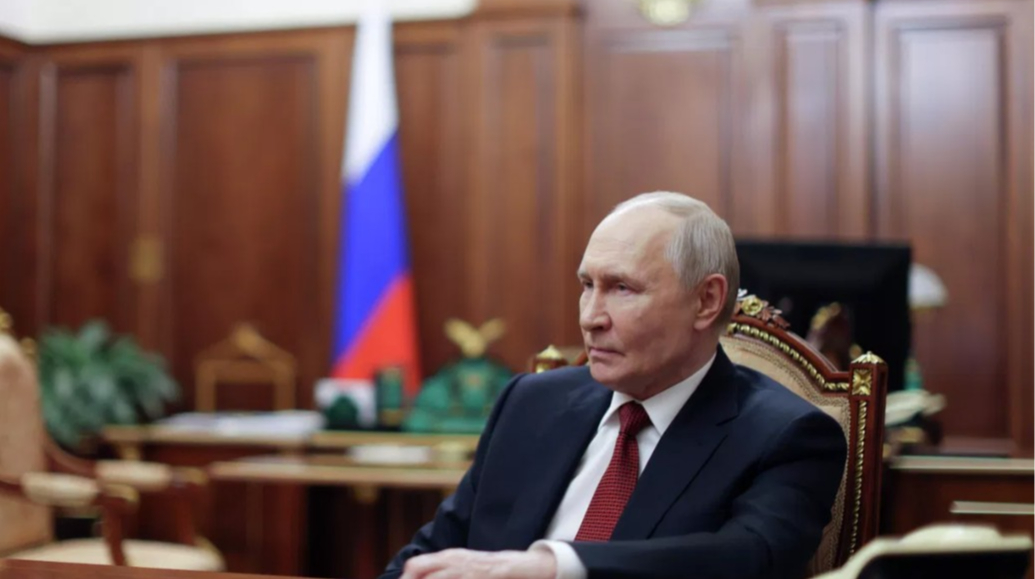
Ukraine expanded its drone campaign against Russian logistics infrastructure over the weekend, hitting four Ozon warehouses and sending the e-commerce company's shares down nearly 30%. The attacks come as Vladimir Putin signed a decree on 24 August allowing the state to seize control of critical infrastructure if owners fail to protect it from drone strikes, a move that directly targets companies like Ozon and Wildberries.
Ozon reported strikes on facilities in Makhachkala, Enem, Adygeysk, and Nevinnomyssk, bringing the total number of its targeted warehouses to six in three days. The company said a logistics hub in Makhachkala was on fire and had halted operations after a drone attack injured several people. Financial analysts at the time noted that Ozon's main shareholder, AFK Sistema, carries significant debt and is unlikely to provide substantial support — unlike Wildberries, which has backing from state-owned bank VTB. The EU had already sanctioned Ozon's and Wildberries' financial units on 24 July.
Putin's decree, published on 24 August, empowers the state to take temporary management of fuel, energy, transport, logistics, and industrial facilities whose owners fail to ensure adequate security or are slow to repair damage after attacks. The Federal Agency for State Property Management acts as the default temporary manager. The decree explicitly cites "the increased threats to the security of critical infrastructure facilities during the special military operation" — Russia's official term for the war. This is a direct response to Ukraine's campaign, which has previously crippled Wildberries' logistics network.
Meanwhile, Ukraine's air force reported that Russia launched 150 Shahed and Gerbera drones and two missiles overnight on 24-25 August. Air defense destroyed 124 UAVs, but a Russian drone struck a 16-story residential building in Kyiv's Holosiivskyi district, causing wall collapse and window blowout on the 13th floor. A guided bomb hit Zaporizhzhia, killing two people. A Russian drone also struck a suburban train in Mykolaiv Oblast, but no casualties were reported because the railway's monitoring center issued an evacuation order in advance, according to Ukrzaliznytsia. Since the full-scale invasion, Russian strikes have damaged 492 locomotives and 249 carriages.
On the political front, the Coalition of the Willing — a group of Western allies — met in Kyiv on 24 August and agreed to boost Ukraine's air defense as a matter of urgent priority, impose further sanctions on Russia's military-industrial complex, and prepare multinational forces. UK Prime Minister Andy Burnham visited Kyiv on Ukraine's Independence Day and announced the declassification of missile technology, enabling Ukraine to assemble Storm Shadow cruise missiles domestically. The Guardian editorial noted that this is "more than another weapon for Kyiv. Britain is helping Ukraine become less dependent on the western armoury."
Russia also launched a military satellite on a Soyuz-2.1 rocket from the Arkhangelsk region on 24 August. Experts believe its purpose is to increase surveillance coverage over Ukraine to support the war effort, according to Al Jazeera.
President Volodymyr Zelenskyy denied that Russia has completely blocked Ukraine's Black Sea corridor, stating that three or four ships still enter and leave Greater Odesa daily despite Russian strikes on port infrastructure. He said Moscow is unwilling to agree to a mutual halt on attacks on civilian vessels, as Russia wants to expand any deal to cover its oil infrastructure.
The combination of the Ozon strikes, the new decree, and the UK technology transfer signals a shift toward longer-range, sustained disruption of Russia's economic and military logistics. For engineers and founders, the takeaway is that Ukraine is systematically industrializing drone warfare to target high-value commercial assets, while Russia responds with state takeover powers that may reshape how infrastructure companies invest in physical security. The Ozon share price drop — a concrete market signal — shows that the economic impact of this campaign is measurable and immediate.
Sources: Ukrainska Pravda, The Guardian, Al Jazeera, The Guardian editorial, Ukrainska Pravda on Coalition statement, Ukrainska Pravda on Putin decree
Sources
- Burnham hands secret missile technology to Ukraine in first foreign trip - The Latest August 24, 2026
- Video: Russia launches rocket into space with military satellite August 24, 2026
- Putin orders protection of logistics and fuel-energy sector from drones, enables state control if owners fail August 24, 2026
- The Guardian view on Britain helping Ukraine: build the weapons independence Kyiv needs | Editorial August 24, 2026
- Air defence, sanctions and multinational forces: what Coalition of the Willing agreed on in Kyiv August 24, 2026
- Zelenskyy denies that Ukraine's Black Sea corridor is completely blocked August 24, 2026
- Ukraine war briefing: Ozon next in Kyiv’s sights as sheds of Wildberries rival burn August 25, 2026
- Russian drone attack damages 16-storey building in Kyiv August 24, 2026
- Two killed in Russian guided bomb strike on Zaporizhzhia August 25, 2026
- Reader Q&A: ask international correspondent Luke Harding a question now August 25, 2026
- Russia attacks Ukraine with 150 drones and two missiles overnight, air defence destroy 124 UAVs August 25, 2026
- Russian drone hits passenger train in Mykolaiv Oblast August 25, 2026
- From "poor, corrupt Ukraine" to EU candidate: how Italy won over Germany and opened the EU’s door to Kyiv August 25, 2026
Part of the dossier
Russia-Ukraine War →