US, Denmark, Greenland strike security deal after Trump's annexation threats
The US, Denmark, and Greenland have struck a security deal expanding American military access while preserving Greenlandic sovereignty, ending a standoff triggered by Trump's annexation threats. The pact's exact terms remain undisclosed, but it appears to maintain the status quo while allowing Trump to claim a win.
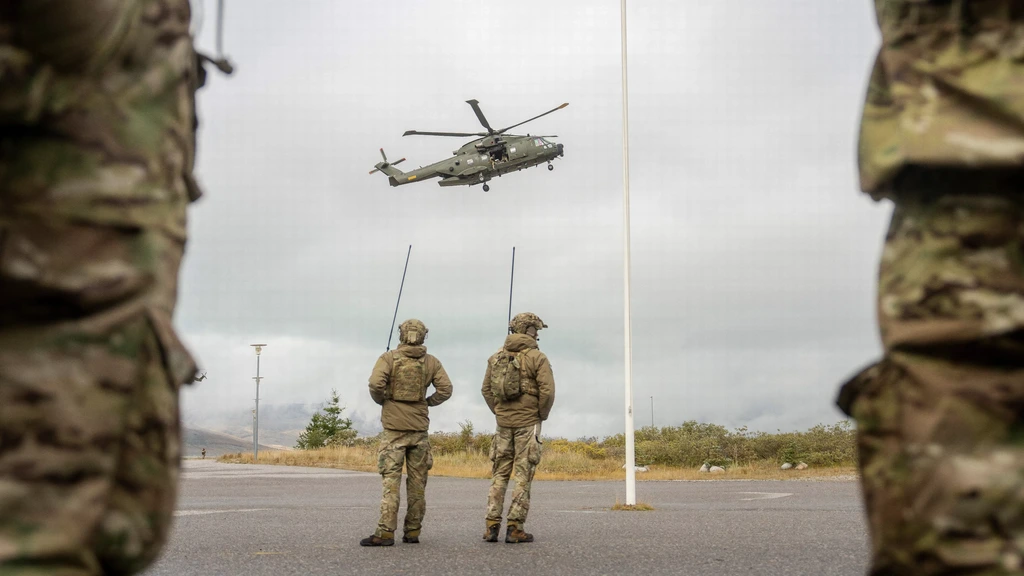
After nearly two years of escalating tensions, the United States, Denmark, and Greenland announced a security agreement on September 19, 2026, that expands US military access to the Arctic island while formally preserving Greenlandic sovereignty. The deal, announced jointly by the three governments, appears to defuse a confrontation that began with President Donald Trump's threats to take Greenland by force.
While the exact terms remain undisclosed, the agreement is being described as a diplomatic resolution that keeps Greenland under Danish control. The Greenlandic delegation returned to Nuuk on September 24 to a hero's welcome, with local officials framing the pact as a victory for the island's autonomy (Al Jazeera video report).
What actually changed
Under the existing 1951 defense agreement, updated in 2004 with Greenland's Home Rule Government as a party, the US already held extensive military rights. During the Cold War, Washington operated 17 installations and more than 10,000 personnel in Greenland. Today, only Pituffik Space Base remains, staffed by about 150 US military personnel (Al Jazeera analysis).
So what's new? Trump's own statement on Truth Social suggests at least one substantive shift: he called the deal an "'Infinite Life' Agreement, there is no end!" The original 1951 agreement was tied to NATO's continued existence — it would remain in effect "for the duration of the North Atlantic Treaty." The new pact may sever that link, giving the US a permanent military presence in Greenland regardless of NATO's fate (Al Jazeera analysis).
Whether that's a meaningful change or a symbolic one remains unclear. The agreement's full text has not been published, and neither the White House nor the Danish foreign ministry has provided specifics beyond the joint announcement.
A diplomatic face-saver
The deal is widely seen as a way for Trump to claim victory without triggering a crisis with two NATO allies. His political allies and aligned media are already praising the negotiating strategy, arguing that sustained pressure paid off and left the US better positioned in a region vital to national security (Al Jazeera analysis).
But as Al Jazeera's opinion piece notes, "much of this was already possible under the existing 1951 defence agreement." The new pact may be more about optics than substance — a way to de-escalate while allowing all parties to claim a win (Al Jazeera analysis).
The Danish public broadcaster NOS reports that the agreement appears to have resolved the immediate crisis, with the threat of violent intervention off the table (NOS). But the deeper question — whether Washington's appetite for Greenland has been permanently satisfied — remains open.
What's still unknown
Three key questions remain unanswered: the specific terms of the security arrangement, how it differs from the 1951 agreement and its 2004 update, and whether the annexation threat is truly gone for good. The Greenlandic government has not released the full text, and neither has Copenhagen or Washington.
For engineers and founders watching this space, the practical implications are clear: the US military footprint in the Arctic is likely to expand, and the legal framework governing it is shifting from NATO-bound to potentially open-ended. That has implications for anyone building in defense tech, satellite communications, or Arctic logistics. The deal may be a triumph of optics, but its operational consequences are still being written.
Sources
Part of the dossier
Greenland security deal reached between US, Denmark, and Greenland →